- The Diagnosis. Education already holds the biggest share of the national budget. What it lacks is a line from that money to results: a multi-year learning gap and half of the Kingdom’s public schools flagged for capability work set the size of the task. The constraint is alignment, not budget.
- The Bridge. What corporate learning and development, built inside one of the Kingdom’s most disciplined industrial cultures, can teach a public sector reforming at national scale.
- Dr Salah’s Verb. A coined word (glocalize) and three global models (Singapore, Finland, UCL) adapted rather than copied. Held together by his own conviction: leadership creates culture, and the culture sets the performance.
Two decades inside SABIC taught Dr Salah AlEissa that people are the highest-return asset an organization can invest in. His current brief, at the national institute responsible for the professional development of Saudi educators, applies that conviction at roughly fifteen times the scale. Thirty-four thousand employees to hundreds of thousands of teachers. Corporate to public. The same operating principle, in a very different kind of system.
The story he tells is not, in its essentials, about scale. It is about what industry has come to know about aligning learning with strategy, and what public systems can gain from the same discipline. Dr Salah’s argument is straightforward: Saudi Arabia has made the largest sectoral commitment to education in the national budget, and the strategic task now is aligning that commitment to outcomes. A learning gap of three to nearly four years across twelve years of schooling, and roughly half of public schools identified as priorities for capability-building, set the scale of that alignment work. In his reading, the constraint is not resources. It is the alignment between resources and outcomes.
Aligning Learning with Strategy
When Dr Salah moved from leading SABIC Academy to designing professional development for the public education sector, I asked him what had to change first. His answer was not about scale. It was about the operating assumptions.
“Companies invest in people because people are the most important asset,” he says. “Learning strategy must align with organizational strategy. That is one of the most important things.”
Stated so plainly, the sentence sounds almost too simple to be useful. Applied at national scale, however, it becomes the guiding principle. The country is investing more than any other sector, and the strategic work is to align that investment with the returns that comparable systems have achieved from disciplined L&D.
He grounds the numbers with a benchmarking method borrowed from industry. Status analysis first, gap analysis next, international benchmarking after. “In my case, I looked at the best. We ran a status analysis and a benchmark, and asked ourselves: how did others actually manage to succeed?”
The Kingdom’s own map surfaces immediately. Al-Baha directorate emerges as one of the strongest performers among regions. At the other end of the distribution, roughly half of the country’s public schools are identified as priorities for capability-building. “When I say 50 percent, that is a very significant proportion,” he says. “Those schools need focused, immediate support.”
I asked what he took from industry and applied to the sector. Three things, in his account.
First, a competency framework. The foundational design principle Dr Salah underscores is that professional development at scale rests on a defined competency base against which every intervention can be evaluated. “On what basis are we designing our learning?” is the question he treats as foundational. A learning system that cannot be measured against a shared base cannot be systematically improved.
Second, a specialization of functions. A mature national system, in his account, separates the two: one institution to design what is taught, another devoted entity to develop the educators who teach it. This is precisely the logic behind the establishment of NIEPD and its role in the current national framework: curriculum and pedagogy in one home, the professional learning of educators in another.
Third, governance. The throughline of the first two. Without a competency framework, learning cannot be measured. Without specialization, function cannot be developed to depth. Without governance, neither survives the next leadership transition.
Programs deliver events. Ecosystems build capability.
Designing the Learning Ecosystem
When I put the word “training” to him, Dr Salah pushed back. He refuses to treat any of this as a training program.
“Analysis, design, development, implementation, evaluation,” he recites, naming ADDIE. “Place these in a value chain and you are building an ecosystem. A leadership-development ecosystem knows where the gaps are, how data flows, how content links to competencies, and how value is measured.”
A program is staffed by a coordinator and a calendar. An ecosystem is staffed by a discipline: instructional design, analytics, content development, delivery, operations. “I cannot do everything on my own,” he says. “I need someone strong in instructional design, in analytics, in content, and in delivery. Together, they make the system work.”
Glocalize: The Discipline of Adaptation
Once the architecture was clear, I asked how he chose the systems to learn from. The way he framed the answer tells you what matters.
“Do we bring them because they are the best, or because they have made the transformation?”
He answered the second way. “We chose them because they had made a real transformation. That is why we brought them in.” The choices followed from the answer.
Singapore, for pre-service teachers. “In ten years they made Singaporean teachers the best in the world, and teaching one of the country’s most attractive professions.” Finland, for the school itself. “They have a model in which the school becomes a learning organization. A learning hub. We cannot afford to send every teacher to hotels and lectures. Learning must be institutionalized inside the school.” UCL Institute of Education in the United Kingdom, for leadership. “One of the best institutes in the world, ranked number one for the past fifteen or twenty years. Their research on how to develop a school principal is exceptionally practical.”
Three borrowings, three distinct purposes. And then the verb that holds them together.
“We took these three models, and I invented a word: glocalize. Take a global model and localize it to fit the Saudi context. The real benefit of an international partnership is not to copy, but to adapt what others do well.”
For Dr Salah, glocalization is not branding language. It is an operating instruction. Best practice is not the imported artefact. Best practice is the verb of adaptation.
Choose the systems that have made the transformation. Not the ones with the best rankings today.
What Saudi Arabia Now Offers the World
I asked whether Saudi Arabia was ever more than a receiver in these partnerships. The flow, he said, has not been in one direction only. When SABIC acquired businesses in Europe and the United States, the leaders who inherited Saudi counterparts were, in his telling, “genuinely amazed by how advanced our leaders were: by the way they spoke, the way they led, the way they managed.” The industrial transformation that made Saudi manufacturing leaders internationally credible had grown out of an alignment between education, work, and leadership. It is that same alignment the country is now working to institutionalize at national scale.
If the first half of the piece describes what Saudi Arabia has borrowed from other systems, the second half considers what Saudi Arabia has built that other systems might now want to borrow.
Dr Salah’s answer begins with the industrial track. The evidence for what a well-aligned system produces is already visible in the corporate record. SABIC’s international acquisitions, referenced above, are not an isolated case. National capability in areas such as chemical industry standards and protection systems has drawn delegations to Saudi Arabia for more than a decade. The know-how existed. The visibility was the missing part.
The educational track is now catching up. Community-driven collaborations among Saudi universities, training councils, hospitals, and industrial firms have started producing concrete artefacts: curricula co-designed with employers, structured placement pathways for graduates, applied-research partnerships that would previously have run abroad. These are precisely the kinds of assemblies international observers have begun paying close attention to, and the Kingdom is producing them at a rate few peer systems can match.
What holds the export together, in his framing, are three pillars that he treats as inseparable. Balanced leadership: the people running the institution have to hold both the ambition and the daily discipline to translate it into practice. A correct theory of change: every initiative needs a defensible account of how the intervention produces the outcome, tested against evidence rather than against faith. Deliberate capacity-building: not just skills and roles, but what he calls the institutional helpers and the supporting culture, designed into the institution rather than added on later. Where all three are in place, initiatives outlast leadership transitions. Where any one is missing, initiatives become events, and events fade.
From Compliance to Capability
I asked what the governance of the next phase would look like. Every national education system, in his account, moves through phases. The first phase establishes the fundamentals: standards, inspection, reporting, the instruments that hold a system together at national scale. The second phase builds on that foundation the capacity to innovate at the level of the school itself. Dr Salah’s argument is that Saudi Arabia is now in the transition between the two, and that the design of the second phase determines whether the investment of the first will compound.
Compliance is what you can measure this month. Capability is what the institution can still do next year when the leadership changes. Both matter, and they do different work. Compliance is the framework. Capability is what the framework enables.
The design principles for the second phase, as he frames them, rest on three moves. The first is data collection built into the daily rhythm of the school itself: analytics that inform decisions locally, not only reports that travel upward. The second is decision authority at the school level, calibrated to a school’s demonstrated capability, so that operational choices can be made where the students are. The third is content ownership: professional learning designed centrally that can be adapted locally, so that the school becomes an active producer of knowledge rather than only a recipient of instruction. Dr Salah’s reframing of the school follows from this: an institution that creates knowledge in its own context, with clearly delineated relationships between teacher, administrator, and student, and operational responsibilities held within clearly defined local boundaries.
The tension every senior leader in the country feels comes into view here. The pace of national reform is faster than the pace at which any institution can absorb change. Dr Salah’s response is neither to slow the reform nor to dilute the ambition. It is to sequence with clarity: an unmoving why, a moving how, and visible early wins that build the social capital required for the harder work of the second phase. Governance, in that model, is not what constrains the pace. It is what makes the pace survivable.
Preparing Talent for a Faster Curriculum
When I asked what the next generation of learners would need that the current curriculum was not yet giving them, Dr Salah opened with an unusual framing of what AI does.
“The more we free our minds, our energy, and our capabilities, the more effective we become in the workplace.” AI, he argues, is a capacity-releaser. It is not the threat the debate has become preoccupied with.
“Is AI a threat? Will it limit human capability? No. AI sharpens the talented. It diminishes only those who depend on it.”
Is the education system keeping up? In his candid view, not yet. The pace of technology is moving faster than the pace at which curriculum can absorb it, and the gap is widening.
“Who decided that a child needs twelve years of study before entering university? Fifty, thirty, twenty years ago that made sense. Today a ten-year-old can be ready to lead, if we reconfigure the system to accelerate readiness.”
He observes a generational compounding effect the system is failing to harness. His generation had books. The next generation had books and internet. The next generation has books, internet, and AI. Each generation is arriving with more learning capacity than the last, and the curriculum has not yet adjusted to what that means.
The argument is not that schooling should be shortened. It is that what schooling is for must be rethought.
Leadership Creates Culture
The closing movement of the conversation returns Dr Salah to where he began: to people as the asset, and to the leadership that determines whether the asset compounds.
I asked how he keeps himself compounding. He offered a personal note. “I read widely, so that my knowledge continues to accumulate.” Then he closed with the line he uses in every program he delivers.
“I always say: leadership creates culture, and culture sets performance. It is one of my own lines.”
Unpacked, it is the argument of the entire conversation. Spending does not create outcomes; alignment does. Programs do not build capability; ecosystems do. Imported models do not transform a system; the verb of adaptation does. And none of these moves are possible without leaders who understand that the institution they are entrusted with is, in the end, made of people.
“We must continue to invest in leadership, and in identifying the talent that will become leaders. In the private sector, in government, in the third sector. Whatever the sector, invest in the right leadership.”
If his argument lands across the system, Saudi education stops behaving as an expenditure and begins to behave as an asset class, capable of compounding. If it does not, the country continues to invest in inputs that do not fully translate into outcomes. The system Dr Salah describes is a national wager on the country’s own talent: disciplined by industrial rigour, sharpened by deliberate global borrowings, and held together by leaders who understand that the work is, finally, about people.
“Leadership creates culture. Culture sets performance.”
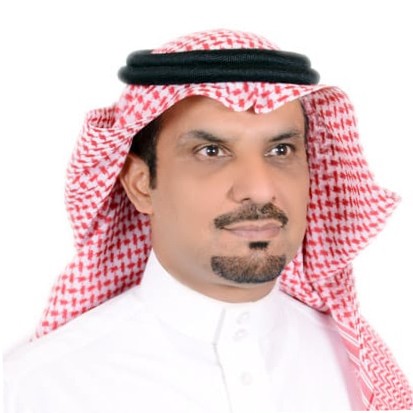
Dr. Salah AlEissa, Saudi strategist and global leader in educational governance and industrial L&D. Dr Salah AlEissa is a Saudi human-capital strategist whose work bridges corporate transformation, governance, and public-sector education. At SABIC, he led global projects including the establishment of SABIC Academy, served as its Chief Learning Officer, and set up the Global Manufacturing Learning function, transitioning through multiple leadership and executive roles. He led the establishment of the Center for Governance (CFG) as part of the Public Investment Fund. He has served as a board member across corporate and academic organizations, delivered international speeches on strategy execution, learning and development, and HR, and trained over two thousand executives and leaders across the GCC. He has helped set up strategies and start-ups for numerous government and semi-government organizations. He currently serves as General Manager of the Center for Educational Leadership at the National Institute for Educational Professional Development (NIEPD), and as Partner and Executive Director at THARWAH Consultancy and Training. His early career included positions at GlaxoSmithKline and Unilever.
Saudi Thought Leadership exists to explore exactly these questions, where global insight meets local ambition, and where reflection becomes the beginning of strategy. If this edition opened a conversation worth having, share it.